
Case story catalogue reaches 500 stories

25 Jan 2012

Case stories are an important and accessible way to share experiences and lessons.  Many organisations have invested in producing case stories and publishing them on their web sites, but finding stories has always required searching in many locations separately.  LenCD has been building up an index of case stories including material from UNDP, the Task Team on South-South Cooperation, SNV, WBI, ECDPM, and other sources.  More than 500 case stories have now been catalogued and are searchable by country and keyword.

The 100 most frequently used words in the case story catalogue

Learning package now available

19 Dec 2011

We are very pleased to announce the new LenCD Capacity Development Learning Package.  It is an open resource on capacity development, developed through a partnership between LenCD and Train4Dev to address the learning needs of capacity development practitioners and as a resource for CD training facilitators.  The package provides an overview of the main approaches to CD followed by development organizations. It does not intend to present a LenCD approach to CD, nor promote one approach over another, but to serve as a resource that offers users a way to assess what they will find helpful for any given context or specific need. The package is  a "living document" and will change as we get feedback from users. We welcome your feedback on the web pages or in the discussion forum.

HLF4 thematic session: "Capacity Development: Lessons Learned and Ways Forward"

01 Dec 2011

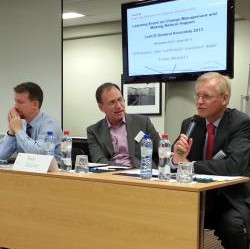
Several members of the network collaborated to organise a thematic panel discussion at HLF4 in Busan. The session brought together ministers and practitioners from all over the world.  We heard inspiring stories from Cambodia, Rwanda, Korea and Kenya, among others.  All testified to the importance of results-focused capacity development in their successful change processes.  In Africa, progress is being made towards concrete CD actions, with the region having developed the Capacity Development Strategic Framework (CDSF) as a policy guiding tool.

The session highlighted this consensus and put forward three concrete post-Busan actions that we wish to carry forward:

  • Result-focused transformational capacity development should be a key  focus of the country-led plans and actions for development effectiveness—The commitment should pay due attention to the building of effective institutions.
  • The strengthening of country systems and institutions within the context of national capacity development strategies linked to overall development plans. In this regard, the necessity to mainstream/integrate capacity development in all sectors and programs.
  • The need for a more systematic approach to capture and share knowledge on capacity development based on country priorities.  We propose that this becomes the focus of our work going forward, using existing national and regional platforms as well as networks to shape  the global knowledge architecture.

In Busan, we have heard over and over that capacity development is not just an add-on, an afterthought, but requires an engaged political leadership to put capacity development at the center of country-led development priorities. Now let’s take some concrete steps to make this happen.

For more details, please see the complete report from the session.

Capacity results: Case stories on capacity development and sustainable results

27 Nov 2011

Capacity - Results book coverA new LenCD publication is now available: CAPACITY → RESULTS: Case stories on capacity development and development results (PDF 2 MB).  This publication is a collection of stories that showcase how endogenous investments in capacity development have led, over time, to produce short, medium and long-term sustainable results. These stories tell how investments in leadership capacity, coalitions for change, knowledge and skills and other capacity assets, have led, over time, to better performing public institutions, communities and civil society organizations; and how these, in turn, have contributed to better health services and outcomes, economic policies and other sustainable development results that have benefited the people. This publication is the results of the collaboration of LenCD partners, representing more than thirty organisations, including government institutions, bilateral and multilateral organizations, and non-governmental and civil society organizations.  We would like to thank our partners who have contributed with their powerful stories on investments in capacity development; Stella Mugabo, from the Rwandan Public Sector Capacity Building Secretariat, for having shared the capacity development experience of Rwanda in the foreword; and IBON Foundation, for having led and shared the cost of the production of this publication.

Member blogs

Tony Land 01 December 2011
  For those who would have liked to see capacity development take centre stage in the Busan outcome document, they might feel short-changed. Its there, but you need to look for it. On the other hand, the plenary session on effective institutions and policies on the final day which received...
mnelson1@worldb... 30 November 2011
Judging by the public statements here at the 4th High Level Forum on Aid Effectiveness in Busan, capacity development has come a long way in the past decade. Nearly all the big speeches and declarations—from the Korean President to the Queen of Jordan—have emphasized capacity...
Syndicate content

Case stories: most viewed today

Research and policy library: most viewed today