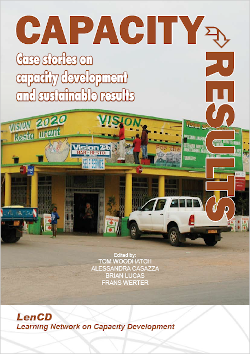
Case stories
676 case stories match the currently selected search criteria.
You can enter a word or phrase to search for, select a country, or press the 'reset' button to clear the criteria.
-
The outbreaks of Highly Pathogenic Avian Influenza (HPAI) in several South-East Asian countries have raised serious economic and public health concerns. In Viet Nam, the first outbreak was reported on December 2003 in Ha Tay Province. By the end of February 2004 the disease was spread in 64 provinces. Facing with many difficulties in dealing with such an unprecedented emergency, the Government of the Socialist Republic of Viet Nam requested FAO’s support for the control of the outbreak...FAO Good Practices Case Study Series 2008
-
Conflict, cronyism, and a flawed privatization process damaged Croatia’s international image during its first decade of independence from Yugoslavia. After a change in government in 2000, a parliamentary consensus formed around the pursuit of European integration, but the European Union demanded real progress in tackling corruption, echoing citizen concerns. In response, the Croatian government created a specialized prosecution service called USKOK, the Bureau for the Suppression of...Princeton Innovations for Successful Societies 2013
-
Given the interest of the four Caribbean countries, FAO worked closely with them to develop national food-based dietary guidelines (FBDGs) to promote healthy diets and lifestyles in Dominica, Grenada, Saint Lucia and Saint Vincent and the Grenadines. Through their involvement in activity planning, training, field testing with the public and broad consultations, each country developed its own set of FBDGs, which became national policies. The factors influencing the success of the intervention...FAO Good Practices Case Study Series 2008
-
When Slovenia became independent from Yugoslavia in 1991, the Central European country rapidly transitioned to free-market democracy, with strong institutions and low levels of graft. In 2004, the government established the Commission for the Prevention of Corruption to demonstrate its commitment to good governance during the application process for European Union membership. However, the new watchdog body, which had no official enforcement powers, soon faced deeper challenges than it was...Princeton Innovations for Successful Societies 2013
-
In December 1998, the Prime Minister of Tonga and the Minister of Fisheries requested FAO’s assistance in reviewing and updating the fisheries legislation as recommended in Tongan national plans of development and in the Tonga Fisheries Sector Review. In response, FAO approved an eight-month Technical Cooperation Programme in 1999. The initiative demonstrated the effectiveness of an intervention working at both an individual and institutional level in having positive impacts at the policy...FAO Good Practices Case Study Series 2008
-
Thua Thien Hue is a province in central Viet Nam with a coastline of 126 kilometres. The province is home to the Tam Giang – Cau Hai lagoon system, which covers five coastal districts and forms a source of livelihood for more than 300,000 people – nearly one-third of the province population. The numerous activities carried out in the lagoon put high pressure on the environment and risk undermining its natural resources. Upon the government’s request, FAO’s intervention...FAO Good Practices Case Study Series 2008
-
The Government of Belize requested FAO’s support to update its legislative framework for biosecurity by drafting parliamentary-level laws on animal health, food safety, plant protection and biosafety. Five draft laws were prepared. The underlying factors that contributed to capacity development in Belize are: Government commitment to meet its international obligations: The Government’s strong commitment to ensuring biosecurity, evident in its signature of the relevant international...FAO Good Practices Case Study Series 2008
-
At the request of the government, a number of FAO projects, under the Technical Cooperation Programme and the Government Cooperation Programme, have contributed to regulate access to and use of land and natural resources. FAO provided support to policy development and the drafting of implementing legislation, followed by support to implementation and awareness raising on the new laws amongst public-sector agencies and the wider society. The two latest Government Cooperation Programme projects...FAO Good Practices Case Study Series 2008
-
In 2003, the Government of Slovenia, through the Slovenia Forestry Service of the Ministry of Agriculture Forestry and Food, requested support from FAO in order to upgrade analytical and planning capacities of its staff and other partners in an important area of economic development: the bioenergy sector. Within the framework of a two-year programme, FAO strengthened capacities at policy, institutional and individual levels through the combination of training, technical support and targeted...FAO Good Practices Case Study Series 2008
-
In January 2002, the Government of the Republic of Zambia requested support from FAO through the Technical Cooperation Programme to obtain up-to-date information on the stock and utilization of natural resources. The Government’s focus of interest concerning land use was to put in place an integrated land use assessment system that would improve the management of land resources, and thus contribute to poverty alleviation, improved food security and sustainable economic growth. The...FAO Good Practices Case Study Series 2008
-
The Government of Kosovo requested support from FAO to develop a medium-term strategy for Education for Rural People (ERP). The ERP strategy 2004-2009 was launched at a national seminar held in Pristina on 24 June 2004 by the Ministry of Education, Science and Technology, the Ministry of Agriculture, Forestry and Rural Development and FAO. The event was also covered by the national media. The main factors contributing to the success of this intervention were: Early involvement of government...FAO Good Practices Case Study Series 2008
-
In 1989, Central and Eastern European countries began a programme of land reform and farm restructuring as part of an overall strategy of transition from centrally planned agriculture to privatization and market development. The case study documents the experiences of Armenia, Serbia and Lithuania. Despite the differences in their context and readiness of their institutional and organizational structures, the three countries strongly recognized the need for modernization in agriculture and led...FAO Good Practices Case Study Series 2008
-
The Gambia has played a pioneering role in establishing community forestry in Africa since the 1990s. In 2000, it participated in the international Seminar on Market Analysis and Development (MA&D) for Community-based Enterprises Development organized by FAO. During the seminar, the Gambian Forestry Department expressed their interest in introducing FAO’s MA&D methodology into their community forestry initiative. From a 28-month pilot phase to the subsequent 20- month Technical...FAO Good Practices Case Study Series 2008
-
A long-standing partnership between the Government of India and FAO has enabled Farmer Field Schools (FFSs) to be introduced and subsequently scaled up in the country. In Andhra Pradesh FFS, known locally as “Polam Badi”, has become the official method to train farmers in sustainable approaches to agriculture. The factors which contributed to the success of the programme are the following: Government commitment: The Government is committed to innovative approaches to building the...FAO Good Practices Case Study Series 2008
-
In 2001, the Electoral Commission of Zambia faced a tense presidential and parliamentary election. The commission needed a new mechanism to stave off conflict, clarify responsibilities for dispute resolution, and provide complainants with an effective outlet for their concerns. Inspired by the use of a similar system in South Africa, the commission leaders developed conflict management committees at both the national and district levels. The committees—comprising representatives from...Princeton Innovations for Successful Societies 2013
-
In 2009, Indonesian president Susilo Bambang Yudhoyono began his second term. During the election campaign, he had pledged to develop the country’s infrastructure, strengthen education, and increase business investment. But delivering on his campaign promises would not be easy. Because he presided over a coalition government, he had to convince ministers from competing political parties to go along with his plans. In addition, his own policy office was understaffed. He had few advisers...Princeton Innovations for Successful Societies 2013
-
Nitish Kumar was elected chief minister of Bihar, India's poorest state, in December 2005, when the state's government was weighed down by two decades of institutional decline. He inherited a paralyzed administration, an unmotivated bureaucracy and a state that could not adequately respond to the needs of its people. His program of administrative reforms loosened the political stranglehold on the bureaucracy, decentralized authority within administrative hierarchies and...Princeton Innovations for Successful Societies 2009
-
In 1995, when Luiz Carlos Bresser-Pereira took charge of the Brazilian ministry responsible for administration and reform, problems plagued the nation’s public sector. Laws and regulations prevented ministries and public sector organizations from working efficiently. Payrolls had ballooned because of rapidly rising retirement costs. Irregular recruitment and a lack of proper training had eroded the talent pool. Soon after taking office, Bresser-Pereira put together an...Princeton Innovations for Successful Societies 2010
-
Nitish Kumar was elected chief minister of Bihar, India's poorest state, in December 2005, when the state's government was weighed down by two decades of institutional decline, widespread lawlessness and a society deeply divided by caste and religion. To win the election and to implement his reform agenda, he engineered a grand bargain whereby almost every distinct social group had a share in state-sponsored development. This paved the way for more fundamental reforms in law...Princeton Innovations for Successful Societies 2009
-
In 2008, Ghana held a peaceful run-off in a hotly contested presidential race, breaking the pattern of violence that had afflicted elections in Nigeria, Kenya, Zimbabwe and several other African countries during the same period. Since the advent of multi-party democracy in 1992, Ghana had held three consecutive elections that observers regarded as relatively free and fair. However, the 2008 presidential race generated concern. Previous elections had revealed substantial ethnic...Princeton Innovations for Successful Societies 2010
This catalogue includes 676 case stories from the following collections:
- UNDP Capacity is Development knowledge fair: 175 stories
- South-South Opportunity: 112 stories
- Princeton Innovations for Successful Societies: 92 stories
- SNV Case story collection: 74 stories
- UNDP Ownership Leadership and Transformation: 47 stories
- USAID Local Capacity Development Summit: 41 stories
- Other collections: 32 stories
- WBI Capacity Development Briefs: 20 stories
- UNDP Capacity is Development: Stories of Institutions: 19 stories
- ECDPM Discussion Papers: 16 stories
- LenCD "Capacity: Results": 15 stories
- ADB Capacity Development in the Pacific: 15 stories
- FAO Good Practices Case Study Series: 12 stories
- UNDP Developing Capacity Through Technical Cooperation: Country Experiences: 4 stories
- WBI Capacity Development and Results: 1 stories
- Capacity.org: 1 stories
LenCD.org uses Drupal Commons by Acquia
Web site development and management supported by United Nations Development Programme, Capacity Development Group
All contributions copyright their authors
Web site development and management supported by United Nations Development Programme, Capacity Development Group
All contributions copyright their authors